



Wood statue of Emperor Kazimiri III the Great
This is a statue of King Casimir the Great. Kazimierz III was the last Polish king of the Piast dynasty and the only monarch in Polish history to be awarded the title of "Great Emperor. The king in the statue is dressed in silver armor, with a gold cloak over his shoulders and lined with purple fabric. He wears a crown in the shape of precious stones and lilies, and holds the symbols of kingship-the scepter and the kingship ball (cross holy ball). It is a Gothic wood carving with facial features similar to his image on a sarcophagus at Wawel Cathedral. This statue was in 1930.

August III expedition statue
The statue is located in the Neustadt district of Dresden, Germany, near the Auguste Bridge, where Elector of Saxony and King Frederick August II of Poland, also known as Auguste III, rides on a leaping horse. The statue sits on a building pedestal decorated with scrolls and kartushes (scrolls). The statue shows the knight sitting deep on the horse. The king wore the uniform of the Roman leader and had his hairstyle in the fashion of the 18th century.

18th century statue of Auguste III Wetin
The statue is displayed in the National Art Collection at Wawel Royal Castle. Auguste III Weiting was the king of Poland and Lithuania who had an important influence on Polish history during his 18th century reign. The statue was carved in the Classicist style using porcelain. Wawel Royal Castle is one of the most important historical and cultural sites in Poland, with a large collection of precious works of art and historical artifacts. This statue is one of the important collections, showing important figures and artistic styles in Polish history.

Sarcophagus of King Casimir IV of Poland
Casimir IV's sarcophagus comes from the Chapel of the Holy Cross in Wawel Cathedral and is an important exhibit in the Wawel Royal Castle Museum. Casimir IV (November 30, 1427-June 7, 1492) was an important monarch in Polish history and the youngest son of King Władysław II of Poland. He was made Grand Duke of Lithuania by the Lithuanian nobility at the age of 13, and became King of Poland after his brother, King Władysław III, died in 1444. During his reign, Casimir IV successfully defeated the Teutonic Knights, recaptured Pomerania, and incorporated Prussia into Poland.

17th Century Polish Commemorative Medal "Sobieski Commemorative Medal"
This commemorative medal is in honor of King John III Sobieski of Poland. The front of the commemorative medal features a side portrait of Sobieski, with the words' IOAN: III D. G. REX POLONIARUM 'written on it, meaning' John III, God's Grace, King of Poland '. On the back of the commemorative medal are two eagles, with the left eagle wearing a Rudolf crown and the right eagle wearing a Polish crown. This commemorative medal can be visited at the Uppsala University Commemorative Coin Museum in Sweden.

Popular Models


Random Model


Japanese taro
611 View

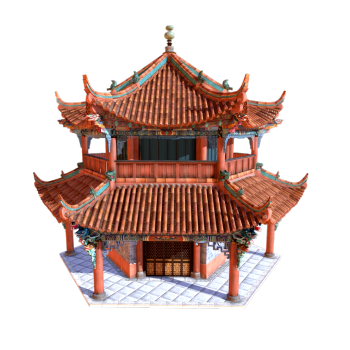
Chinese Temple Pagoda
1038 View


Nike Air Max 90 Olive Green sneaker
741 View

Edward Noerplin's' The Flower Girl '
695 View

Abandoned Esso gas station
1358 View

Japanese fox wooden mask
686 View
